With non-stop news coverage of the horrific massacre of children and educators at Sandy Hook Elementary School in Newtown, CT, what is there to add? Words are inadequate. I could give my opinion on gun control laws, cops in schools, mental illness, video game violence or a myriad of other societal ills. There will be plenty of those discussions this week on the airwaves, over the internet and around water coolers. Words are inadequate.

As a pastor and a police chaplain for many decades, I’ve spent countless hours with people who are struggling and wrestling with the biggest question—the WHY question—in the face of relentless tragedies and injustices. And like spiritual leaders of any sort, I scramble to try to say something in response and I always come away feeling inadequate. It will not be any different this time. But we can’t shrink from the task of responding to that question.
It seems to me, the very best way to honor the memories of the ones we’ve lost and love is to live confident, productive lives. And the only way to do that is to actually be able to face the “why” question. We need the strength to face a world filled with constant devastation and loss.
First, we must recognize the problem of tragedy, injustice and suffering is a problem for everyone no matter what their beliefs are. The problem of injustice and suffering is a problem for those who believe in God and for those who don’t—or for any set of beliefs. So abandoning belief in God does not really help in the face of it. Okay, then what will?
Every faith offers resources for dealing with suffering and injustice in the world. But as a Christian pastor I know my own faith’s resources the best, so let me simply share with you what I’ve got. When people ask the big question, “Why would God allow this or that to happen?” There are usually two answers. One answer is: “Don’t question God! He has reasons beyond my finite little mind. Just accept everything. Don’t question.” The other answer is: “I don’t know what God’s up to – I have no idea at all about why these things are happening. There’s no way to make any sense of it at all.” Neither answer is fully adequate.
Tim Keller, pastor and author wrote these words on Facebook this weekend: “One of the great themes of the Hebrew Scriptures is that God identifies with the suffering. There are all these great texts that say things like this: If you oppress the poor, you oppress me. I am a husband to the widow. I am father to the fatherless. I think the texts are saying God binds up his heart so closely with suffering people that He interprets any move against them as a move against Him. This is powerful stuff! But Christianity says God goes even beyond that. Christians believe that in Jesus, God’s son, divinity became vulnerable to and involved in – suffering and death! He didn’t come as a general or emperor. He came as a carpenter. He was born in a manger, no room in the inn.” I completely agree.
Another pastor, John Stott wrote: “I could never myself believe in God if it were not for the Cross. In the real world of pain, how could one worship a God who was immune to it?” Do you catch what this means? Yes, we don’t know the reason God allows evil and suffering to continue, but we know what the reason isn’t, what it can’t be. It can’t be that he doesn’t love us! It can’t be that he doesn’t care. God so loved us and hates suffering that he was willing to come down and get involved in it. And therefore the Cross is an incredibly empowering hint. Ok, it’s only a hint, but if you grasp it, it can transform you. It can give you strength.
QUESTION: What gives you hope in the face of evil and injustice? Share your comments below.
A certain amount of water has to have gone under the bridge of life before we can effectively begin to develop a personal mission statement. A lot of us come out of college with very little real world experience and we make choices about our careers, despite our lack of experience. One of the things I love about being past halftime is that I have years and years of hindsight and experience. I know what I’m good at and not so good at. I know what I’m passionate about and what I could care less about. These things are a huge plus when it comes to developing a mission statement.
 According to the management guru, the late Peter Drucker, a mission statement is designed to say, “Why we do what we do. What we want to be remembered for.” Your mission statement doesn’t need to describe how you will go about it. How you accomplish it will change as your environment and technology changes.
Lloyd Reeb, author of Success to Signficance, reminds us there are three elements to developing a personal mission statement:
What kind of people or what cause do you care about the most?
What difference do you dream that you could make for those people or that cause?
What is your greatest skill or area of competence that you can bring to bear?
As for myself, I’ve discovered that I care deeply about people who are in mid-life and beyond and seem to be unclear about their mission. I hate the thought of mature people just coasting toward the grave. I also know that every spiritual gift inventory I’ve ever taken over the past several decades always scores me very high in encouragement or exhortation. And, I know I’m also a fairly skilled communicator. I know I have coaching skills too.
Therefore, my personal written mission is “to inspire transformissional living in adults over 50.” Every word is aligned with my gifts, my passions and the impact I want to make. I’m dedicated to using my gifts of encouragement and exhortation to inspire. I’m passionate about seeing change happen in the lives of people I influence. I’m fervent about helping people live intentionally and purposefully. And my target audience is adults over 50. It’s all wrapped up in my personal mission statement.
So, if you don’t have a mission statement or need to write a second-half mission statement, why don’t you start developing one today by writing your answers to the three questions above. And, maybe just jot down a few words or phrases that summarize those answers. And then stay tuned, I’ll have more to suggest in my next post that will help you to write your personal mission statement. And in the meantime, go to the Mission Statements website for some ideas that might stimulate you toward developing your own statement.
QUESTION: Would you share what you are learning about yourself through these exercises? Use the comment section below.
Imagine it’s your 80th birthday and your spouse or a friend planned a quiet evening at your favorite restaurant. When you arrive, you are surprised to see the whole restaurant is reserved for you. Your closest family, friends, and colleagues are all there. After dinner, one-by-one, each attendee comes up to the microphone in front of the room and speaks. They have been asked to speak about three things.
 The three things your surprise birthday guests speak about are:
Here’s what I admire most about you…
Here’s the difference you made in my life…
Your #1 lifetime achievement of significance is…

So what would you want to hear from your family, friends and peers on these three issues?
You can’t build an intentional plan for the future if you don’t have a vision of what you want it to look like. This exercise will help you envision a second half or a third third of life that you consider meaningful and satisfying. I know because I’ve done it.
QUESTION: Would you share an answer to at least one of the three questions above? Use the Comment section below.
Ever since he turned 50, my father Thurlowe (pictured below), has said on his birthday, “I’m not going to complain about how old I am. Having another birthday is better than the alternative.” My dad has had a challenging year since having major back surgery before he turned 83 back in June. He’s making slow progress but still isn’t back to walking. Yet, I think he would say that birthdays are better than the alternative. Today is my birthday. It’s better than the alternative.
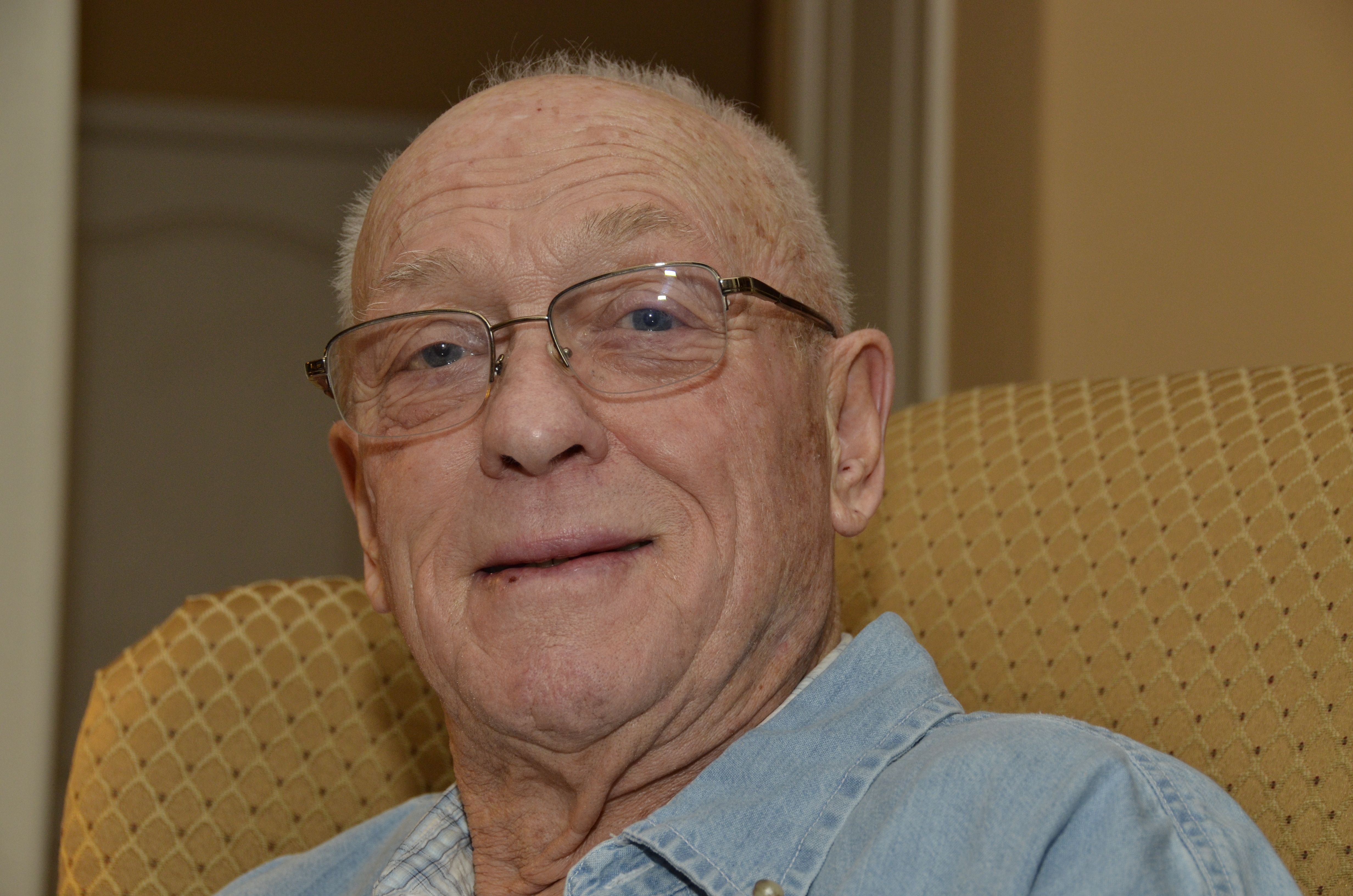 Today, I turn 59. Being in my 50’s has been great. A lot of fantabulous things have happened. But as I stop and think about it, today I am beginning my 60th year. Now that sounds a little uncomfortable. A whole new decade—my sixth decade. It doesn’t seem possible that I’ve already lived 707 months or 3,078 weeks, 21,546 days, 517,107 hours, or over 31 million minutes.
The World Life Expectancy website says the average Floridian lives until 79.7 years of age. In my birth state, Oregon, it’s 79.04. I must come from pretty good “long liver” stock because my four grandparents lived until 73, 90, 90 and 97. That’s an average of 87.5 years. My dad is now 83 and my mother turns 80 in a couple weeks. So, statistically, maybe I have another 20-30 years left. Maybe I’m starting my third third as Walter C. Wright suggests in his book “The Third Third of Life: Preparing for your Future.”
These four things I know well because I’ve shared them at hundreds of funerals over the last 33 years:
- We all die.
- Life is short at it’s longest.
- Some things are more important than other things.
- God cares about our lives here on earth and for eternity.
Therefore, knowing what I know, I will never forget, in whatever time I have left, we all die. None of us are guaranteed another minute, another hour, another day, another year or another decade. Therefore I will live my remaining time with intentionality and purpose—living out my mission.

As quickly as 59 years seems to have gone, I know another 20-30 potential years will go by fast. I will make sure I don’t waste my time, talent and treasure on things that don’t contribute to the mission and purpose that God has designed me for.
Aware that some things are more important than others, I will gladly say “yes” to the things that matter most and boldly say “no” to the things that are of low priority. My relationship with God, my wife, my children and their spouses, my grandchildren, my friends and my calling to inspire transformisisonal living in adults over 50 will be at the very top.
Assured that God cares about the here and now and the hereafter, I will invest in my own intimacy with God and always look for ways to point others to an intimate relationship that God eagerly offers with Himself.
How will you live your life today—with intentionality and purpose or haphazardly and unplanned?
QUESTION: What is at the top of your priority list today? I’d love to have you share it in the comment section below.
The Hebrew Scriptures include these incredible lines from a psalm written by King David: “For you created my inmost being; you knit me together in my mother’s womb. I praise you because I am fearfully and wonderfully made” (Psalm 139:13-14). You are fearfully and wonderfully made by the hands of a loving Creator. That creative process didn’t stop at birth. God has continued to mold and shape you over the years with a care that exceeds the most meticulous craftsman. He gave you a unique personality. He has given you unique abilities. You have unique passions. God made you absolutely unique for a purpose.
 Bob Buford addresses the issue of purpose in his book, Halftime. He states, “Most of us spend the first half of our lives becoming adults, getting an education and seeking our own version of ‘success.’” However, the truth is, most of us don’t pursue significance and purposeful living. That’s why my personal mission statement is to “inspire transformissional living in adults over 50.”
If you are going to write a personal mission statement, it is important to know your passion, your greatest God-given abilities and spiritual gifts. I’m quite sure you have a pretty good idea what your top strengths are. If not, there are many excellent assessment tools to assist you. Strengths Finder 2.0 is one I suggest. If you are committed to seeking after God with all your heart, soul, mind and strength, you have at least one spiritual gift that is an extraordinary ability intended by God to be used to serve others. There are also many good spiritual gift assessment tools you can us such as Uniquely You.
 The bottom line, if you are going to be clear about your mission, you should able to identify your abilities and unique gifts. For example, I know the natural strengths and abilities I’ve developed include writing, speaking, coaching, influencing others and leading teams. I also know my number one spiritual gift is exhortation – encouraging others. That’s why my mission statement includes “inspiring transformissional living” in it. I love to use a variety of my skills to encourage and exhort others to transformational and purposeful use of their time, talent and treasure.
What steps will you take this week to make sure you are getting more clarity regarding your gifts and abilities? You were made to be a uniquely created, awe-inspiring individual. Have you taken the time to discover those strengths and gifts that will help you to be clear about your mission? If not, maybe it’s time to get started.
QUESTION: What are your top two natural abilities? Share them in the comment section below so we can celebrate who God has made you to be.
Several years ago when I first read John Elderedge’s book “Wild at Heart,” a couple sentences really grabbed my attention. “Don’t ask yourself what the world needs. Ask yourself what makes you come alive, and go do that, because what the world needs is people who have come alive.” What makes you come alive? In other words, what is your passion? Knowing the answer is necessary to write your personal mission statement.
 Passion is the fuel of life. It’s the great source of energy and drive. It’s what makes us explore new places, new relationships and seek solutions to perplexing problems. Unfortunately many people – especially men – possess very little awareness of their deepest inner drives and motivations. (from Halftime workshop handout).
I’ve met a lot of people who don’t have a clue what really makes them tick. They’ve spent so much time just trying to live up to the demands and responsibilities they’ve been handed, there has been little to no effort given to discover their real passions.
What causes, issues and groups of people are you most concerned for? What change do you most want to help bring to the world? Halftime leaders like Lloyd Reeb speak of the Passion Spectrum. There are four points of reference:
- Needs – Recognize thousands
- Concerns – Sensitive to many
- Burdens – Impressed by a few
- Passions – Moved deeply by one or two
While you may recognize hundreds of needs and be sensitive to many concerns, you are only impressed by a few burdens. And if you are like most people I know, you are only moved deeply by one or two passions.
 I’ve noticed that my passions have shifted slightly over the years and I think that is fairly normal. My early years of ministry were intently focused on launching Cape Christian —a contemporary church which reaches young unchurched families. Don’t misunderstand me, I’m still very passionate about that same goal. But I’ve inspired and mentored a whole generation of young leaders to carry out that passion. Now, my greatest mission is to inspire transformissional living in adults over 50. I just can’t stand to see older adults in coasting mode, not growing and not knowing their purpose and mission. There are many needs, concerns and burdens, but this is one of my top passions.
Would you write your top one or two areas of passion? It’s an important first step in writing a personal mission statement.
QUESTION: If you know your top passion, would you please share it with us in the comment section?
What is your mission in life? Do you have a mission statement? Do you know your reason for existing? At Mission Statements website, the home page states, “A mission statement defines in a paragraph or so any entity’s reason for existence. It embodies its philosophies, goals, ambitions and mores.” It is common for companies and organizations to write mission statements. Nike has a one-sentence mission – “To bring inspiration and innovation to every athlete in the world.” Now, think about it, how many individuals do you know who write personal mission statements? Why do you think there are so few?
 If it’s true that an entity attempting to operate without a mission statement runs the risk of wandering through the world without having the ability to verify that it is on its intended course, is it not also true of individuals? If you don’t know what your mission is, how will you know if you are accomplishing it? In other words, how will you know you’ve arrived if you don’t know where you are headed?
A personal mission statement provides clarity and gives you a sense of purpose. It defines you and how you will live. For years, I didn’t have a written mission statement. Fortunately, I did have a fairly clear sense of my call and mission in my head. Having a sense of purpose kept me from wasting a lot of years wandering without direction.
 About ten years ago, I wrote a life purpose statement that I’ve carried on a laminated card in my wallet: “To be an authentic connection between God and people through exercising my leadership gifts and unique personality.” That written mission frequently was a filter for choosing between offers and opportunities that came my way.
With the help of a mentor, Lloyd Reeb (author of Success to Significance), I recently revised my mission statement to reflect what I had already written before launching this blog: “Inspiring transformissional living in adults over 50.” My newly updated statement is a more precise and appropriate focus for me at this stage of my life and career.
Just this week, my mission statement helped in my decison to decline an invitation to serve on the board of a ministry I admire. I’ve worked along side this organization for nearly two decades. This board only meets a couple times a year for a several hour meeting. It really wasn’t the time commitment. When I looked at this opportunity through the lens of my newly focused mission statement, it was perfectly clear to me that I should say, “No.” Serving on this ministry board would not help me to “inspire transformissional living in adults over 50.”
Over the next several posts, I want to inspire you to write a mission statement if you don’t have one. If you have one, I hope to help you make sure it is clear to you and to others. I hope to assist you in exploring what make you tick? And, I plan to help you think about your gifts and abilities and how these fit into your mission. Let’s go on this journey together, okay?
QUESTION: If you have a mission statement, would you share it with us in the comment section below?
As a pastor and a police chaplain, every week I’m comforting someone who is facing the reality that we are all terminal. I prayed with two cops yesterday – one whose 62 year old mother died of a heart attack and another whose 66 year old mother just found out she has an advanced stage of cancer. The one common thing that all of us want when we consider the end of our lives is this: Did we live a life that mattered?
We all want to matter. We want our lives to have counted for something. We don’t want to live in such a way that we didn’t leave a footprint. We want to know that our lives weren’t lived in vain. We question: Did we contribute? Did we make a difference? Will any one remember us?
My pastoral role has placed me in a morgue with brothers confirming the identity of their 19 year old sister, at a suicide scene comforting devastated parents, beside a hospital bed with a spouse as the life-support machines were unplugged and the EKG monitor conclusively flat-lined, and in a hospital emergency room telling young parents that the medical staff had tried everything but they couldn’t bring their child back. These are just a few samples from the last three decades.
I know you might think it’s morbid to talk about death–-that maybe I’m a bit abnormal. But actually, it’s unhealthy to live in denial of death and not consider the inevitable. Only a foolish person would go through life unprepared for what we all know will eventually happen.
When I’m speaking at funerals, I love to get family members, friends and acquaintances thinking about their own legacies. I like to ask: How do you need to live today so that you will be remembered as someone whose life really mattered? What is currently at the top of your priority list and is that what really matters most? What will be your contribution today to those who will be memorializing you later? What will they say about you and how you lived your life when you are the one being eulogized?
My mission is to inspire transformissional living— especially in adults over 50. I love to see people still being transformed relationally, spiritually and emotionally as they mature. I’m passionate about helping folks be very intentional and purposeful about using their time, talent and treasure well as they play in the second half of the game. So, I won’t sidestep hard discussions about topics we prefer to ignore.
So I conclude by asking, are you living in such a way now that you will know at the end that your life truly mattered? If yes, what more of the right things do you need to do more often to increase your impact so that everyone around you will also know that your life mattered? If not, what needs to change and when and how will that change begin?
QUESTION: What measurement are you using to know for sure that your life really matters? Please share your answer in the comment section below.
If you pay attention to the stock market, you know it’s up, it’s down. Good investors say patience is one of the greatest virtues. An old Chinese proverb offers this lesson for investors: “If your vision is for a year, plant wheat. If your vision is for ten years, plant trees. But if your vision is for a lifetime, plant people.” I love planting people! And tasting the results of long-time planting is even sweeter!
 Things like stocks come and go, but people will carry your values and beliefs through generations. Investing in your family and other people is an ultimate long-term view, the mutual fund of a lifetime.
As with any financial investment, starting early and being consistent over the long-haul is a proven way to accumulate the greatest results. That’s also true of investment in people. Intentionally pouring love and nurture into a baby and consistently mentoring that growing child toward adulthood will bring the best possible chance of a positive outcome. This principle is one of the reasons that my wife Linda loves her job. She’s a labor and delivery nurse. She regularly gets to inspire new parents to invest well right from the get go.
 Regardless of whether reflection on your past investments lead to a sense of regret or fulfillment, it’s not too late to start investing in people. I suggest you make sure you are investing in your family first of all. If married, start with your spouse. If a parent, make sure you are investing in your children. If a grandparent, sow intentionally into your grandchildren. People will carry your values and beliefs through generations.
 Let me also suggest that you also consider investing in a younger person outside your family circle. It could be coaching a future leader in your work place. It might be mentoring a student in a local school. You could be a Marriage Mentor. Or you could guide a spiritual seeker into a maturing relationship with God.
If you live in Southwest Florida, you could invest in a student through Not In My City. There are many ways to make a difference in the lives of children in every community. Explore the opportunities through your House of Worship or through your local United Way organization.
Who are you investing in? Are you being intentional about investing in your family? Are you investing in anyone in the generations below you? If not, why not get started?
QUESTION: Who invested in you? How have they impacted your life? Share your comments below.
This week, God welcomed into heaven a great influencer in my life, Zig Ziglar. Motivational speaker and author extraordinaire, Zig was known for his sales and positive attitude seminars that grew into packed arenas. I first heard him speak back in the late 80’s as a guest speaker at a conference in Indiana led by John Maxwell. Then I led a study group video series by Ziglar, “Raising Positive Kids in a Negative World” in the 90’s. Around 2000, I heard him again at the American Airlines Miami Arena alongside an impressive line-up of speakers such as Colin Powell, Laura Bush, Barbara Bush and Larry King. Every time I listened to Zig speak, I went away motivated to the max!
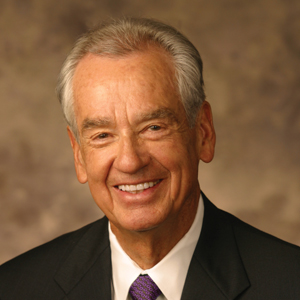 Zig Ziglar, lost his father at age 5. Born in Yazoo City, Mississippi, he was the 10th of 12 kids. He started selling peanuts on the street at age 6 and then mowing yards.
At age 12, he started working at a grocery store with John R. Anderson who treated him as a son. Mr. Anderson taught him that if you were kind to people and followed through with every promise, you would have a better career. Young Zig watched how Mr. Anderson treated African-American’s with respect and kindness in the deep south long before the civil rights movement. One of Zig’s favorite things to say was, “God don’t make no junk…color has nothing to do with it…it’s your heart.”
Zig Ziglar shaped me from a distance. He taught me to start looking at the positive side of every situation. So, in tribute to Zig, here’s some of some of his quotes that are favorites of mine.
“It’s not what happens to you that determines how far you will go in life; it is how you handle what happens to you.”
“The chief cause of failure and unhappiness is trading what you want most for what you want right now.”
“Be helpful. When you see a person without a smile, give them yours.”
“Failure is a detour, not a dead-end street.” 
“You don’t have to be great to start, but you have to start to be great.”
“You can have anything you want if you help enough other people get what they want.”
“What you get by achieving your goals is not as important as what you become by achieving your goals.”
“The foundation stones for a balanced success are honesty, character, integrity, faith, love and loyalty.”
“With integrity, you have nothing to fear because you have nothing to hide.”
QUESTION: Any Zig Ziglar quotes that have shaped you? Share them in the comment section below.